

How To Choose Between Boiler Types
Choosing a new boiler can feel overwhelming.
A quick search online will tell you that combination boilers are the best, system boilers are ideal for larger homes, and regular boilers are suitable for older properties. While there is some truth in that, the reality is far more complicated.
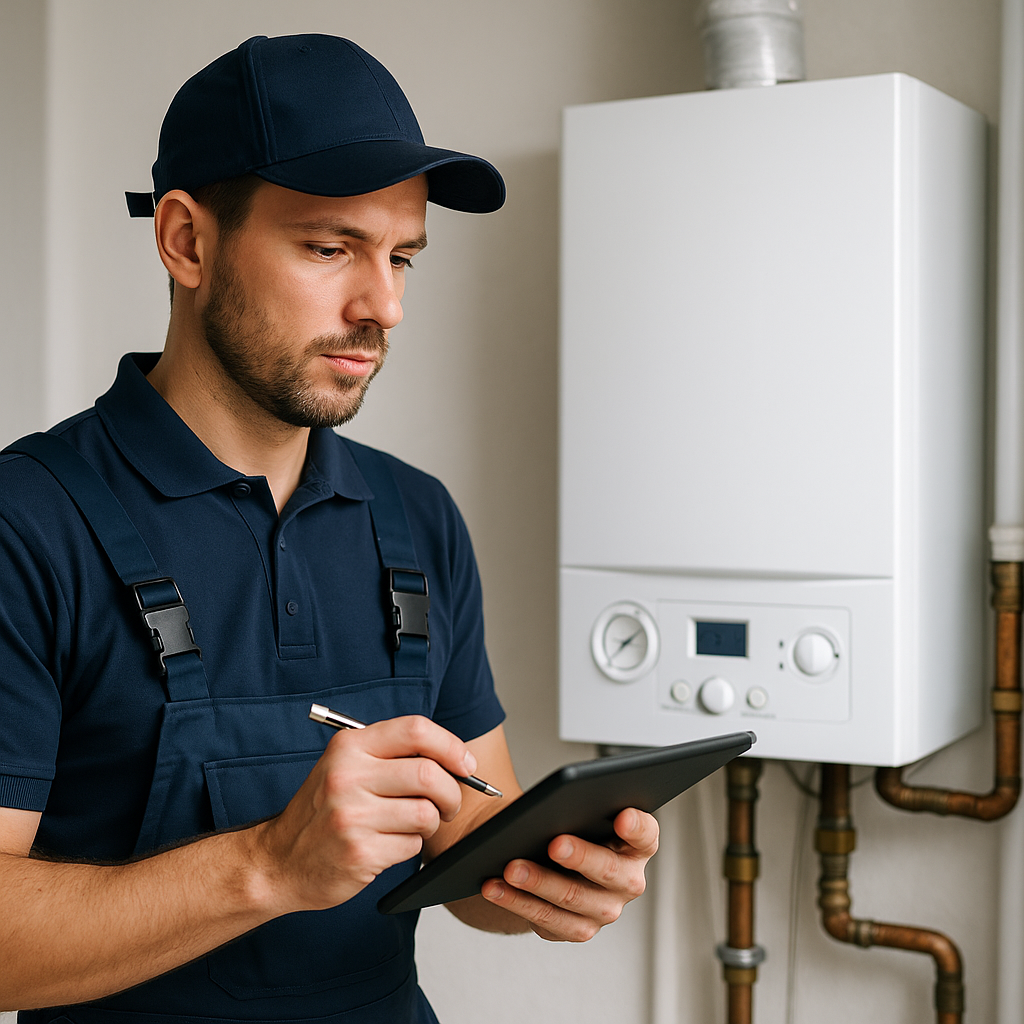
After working in the heating industry since 2001 and personally carrying out boiler surveys across Essex, I've learned that there is no "best" boiler type. There is only the best boiler for your home.
At Assured Heating Essex, we install around 250 new boilers every year. One thing I've noticed is that the right boiler choice isn't determined by marketing brochures or internet articles. It's determined by a proper survey and understanding how the household actually uses hot water and heating.
The Biggest Mistake Homeowners Make
Many homeowners start by asking:
"Which boiler is best?"
In my opinion, that's the wrong question.
The better question is:
"Which boiler is best for my home, my family, and my future plans?"
Every property is different. A boiler that works perfectly in one house may be completely unsuitable in another.
That's why we spend time understanding:
- The number of occupants.
- The number of bathrooms and showers.
- Existing pipework.
- Water flow rates.
- Future extension plans.
- Budget requirements.
- Reliability expectations.
Only after gathering that information can a proper recommendation be made.
Understanding The Different Boiler Types
Combination Boilers
Combination boilers, often called combi boilers, provide heating and hot water directly from the boiler without the need for a separate hot water cylinder or cold water storage tank.
They are extremely popular because they:
- Save space.
- Provide hot water on demand.
- Remove the need for loft tanks.
- Simplify the heating system.
- Typically have fewer external components.
Modern combi boilers have improved dramatically over the years.
Many of the negative opinions people still have about combi boilers are based on experiences from older models installed decades ago.
When properly sized and installed, a modern combi boiler can be an excellent choice.
System Boilers
System boilers work alongside a hot water cylinder but do not require a cold water storage tank in the loft.
They are often suitable for larger homes where multiple bathrooms may be used simultaneously.
A system boiler can store larger quantities of hot water, which can be beneficial for households with higher demand.
Regular Boilers
Regular boilers, sometimes known as conventional or heat-only boilers, typically work with both a hot water cylinder and a cold water storage tank.
Many older properties still operate with this type of system.
While there are situations where they remain the correct choice, many homeowners are now choosing to move away from loft tanks where practical.
Why Water Flow Rate Is So Important
In my opinion, water flow rate is the single most important factor when considering a combi boiler.
Unfortunately, this is something many surveys fail to properly assess.
At Assured Heating Essex, we don't simply turn on a kitchen tap and make a guess.
How We Test Water Flow
We test the mains water flow using a flow cup connected to an outside tap.
There is a good reason for this.
Kitchen taps are often connected using flexible tap connectors which can restrict flow and provide misleading results.
An outside tap is normally connected directly to 15mm copper pipework, giving us a far more accurate indication of the property's actual mains water performance.
This gives us a true reading.
We Also Test The Shower
We then carry out a flow test on the shower.
What we're looking for is whether the shower flow is lower than the available mains water flow.
If it is, we know that a combi boiler can often provide equal or even improved shower performance compared to the existing system.
This is one of the most important parts of the survey process and can dramatically influence which boiler type is recommended.
When A Combi Boiler May Not Be The Best Choice
Although I am a huge fan of modern combi boilers, they are not suitable for every property.
For example, if a household regularly uses multiple showers at the same time, a combi may not be the best solution.
As a general rule, three showers running simultaneously on a combi boiler is usually a no-go.
The available mains water supply is shared between outlets, so demand must be carefully considered during the survey.
This is exactly why a proper assessment is so important.
Pipework Matters More Than Most People Realise
One thing that is often overlooked when converting to a combi boiler is the condition and accessibility of the heating pipework.
When converting from an older open-vented system to a combi boiler, the heating system becomes pressurised.
If existing pipework runs underneath floors and is inaccessible, any weak joints that have existed unnoticed for years may become apparent once pressure is introduced.
That doesn't automatically mean a combi conversion cannot be completed, but it is certainly something that should be assessed before making a recommendation.
The Problem With "Like For Like" Replacements
Many homeowners assume the safest option is simply replacing their existing boiler with the same type.
Sometimes that is the correct decision.
Often it isn't.
Just because a house has a conventional boiler today doesn't mean it still needs one.
Family circumstances change.
Extensions are built.
Bathrooms are added.
Water supplies improve.
The easiest installation is not always the best installation.
I regularly visit properties where previous quotations have recommended the simplest job for the installer rather than the best long-term solution for the customer.
The survey stage is where these decisions should be made properly.
Common Boiler Myths
Bigger Boilers Are Better
Not necessarily.
A boiler should be sized correctly for the property's heating and hot water requirements.
Oversizing can reduce efficiency and increase costs unnecessarily.
However, there are situations where installing a larger boiler today makes sense.
For example, if a homeowner plans to build an extension in the future, a larger output boiler can often be installed and range-rated down through the boiler settings.
When the extension is completed, the boiler output can then be increased accordingly.
Combi Boilers Can't Cope With Modern Homes
This may have been true many years ago.
Modern combi boilers are significantly more capable than earlier generations.
When correctly sized and matched to the available water supply, they can perform exceptionally well.
Cheap Boilers Offer The Same Value
In my opinion, you get what you pay for.
There are now boilers available through DIY stores, but I would personally avoid them.
The boiler is one of the most important appliances in your home and should be viewed as a long-term investment.
Which Boiler Brands Do We Recommend?
At Assured Heating Essex, the vast majority of our installations are Worcester Bosch boilers.
In our opinion, Worcester Bosch currently offers the best combination of reliability, warranty support and aftercare.
Vaillant would also rank highly.
One advantage of our long-standing relationship with Worcester Bosch is that if a Worcester Bosch boiler we have installed develops a fault under warranty, we can often attend and resolve the issue directly.
That means a quicker solution for the homeowner.
Some Worcester Bosch boilers are available with guarantees of up to 12 years.
Why Modern Boilers Are Better Than Ever
Modern boilers have come a long way.
Today's boilers are:
- A-rated for energy efficiency.
- Highly reliable when maintained correctly.
- Capable of modulating output to match demand.
- Designed to improve overall system efficiency.
- Able to contribute positively towards EPC ratings.
Modern boilers don't simply run at full power all the time.
They can intelligently adjust their output based on the heating demand within the property, helping improve efficiency and reduce energy consumption.
Choose The Installer Before You Choose The Boiler
If there is one piece of advice I would give homeowners, it is this:
Choose the installer before you choose the boiler.
The quality of the survey, design and installation will have a greater impact on your long-term satisfaction than the name printed on the front of the appliance.
A good installer will:
- Listen to your needs.
- Assess your property properly.
- Test your water supply.
- Consider future plans.
- Recommend the correct boiler type.
- Size the boiler accurately.
A poor survey can result in the wrong boiler regardless of the brand selected.
Final Thoughts
There is no universal "best" boiler type.
The right boiler depends on your property's water flow rate, heating requirements, future plans and how your family uses hot water on a daily basis.
Don't choose based on price alone.
Don't assume like-for-like replacement is always correct.
Most importantly, always have a proper survey completed before making a decision.
The right installer will help you choose the right boiler. The wrong installer may simply recommend the easiest one to fit.
After all, there isn't a best boiler for everyone.
There is only the best boiler for your home.